

Deep inflammation.
Severe or long lasting acne can damage the skin structure.
Acne scars come in different shapes and depths, and each type responds to different approaches. Choosing the right one starts with identifying the type.

Illustrative model. Not a patient.
Scars form when acne damages the deeper skin and healing leaves a dip or a raised mark. Common types are rolling, boxcar and ice pick scars, along with flat marks that are pigment, not true scars.
Severe or long lasting acne can damage the skin structure.

This raises inflammation and the chance of scarring.

Active acne left untreated for a long time has more chance of scarring.
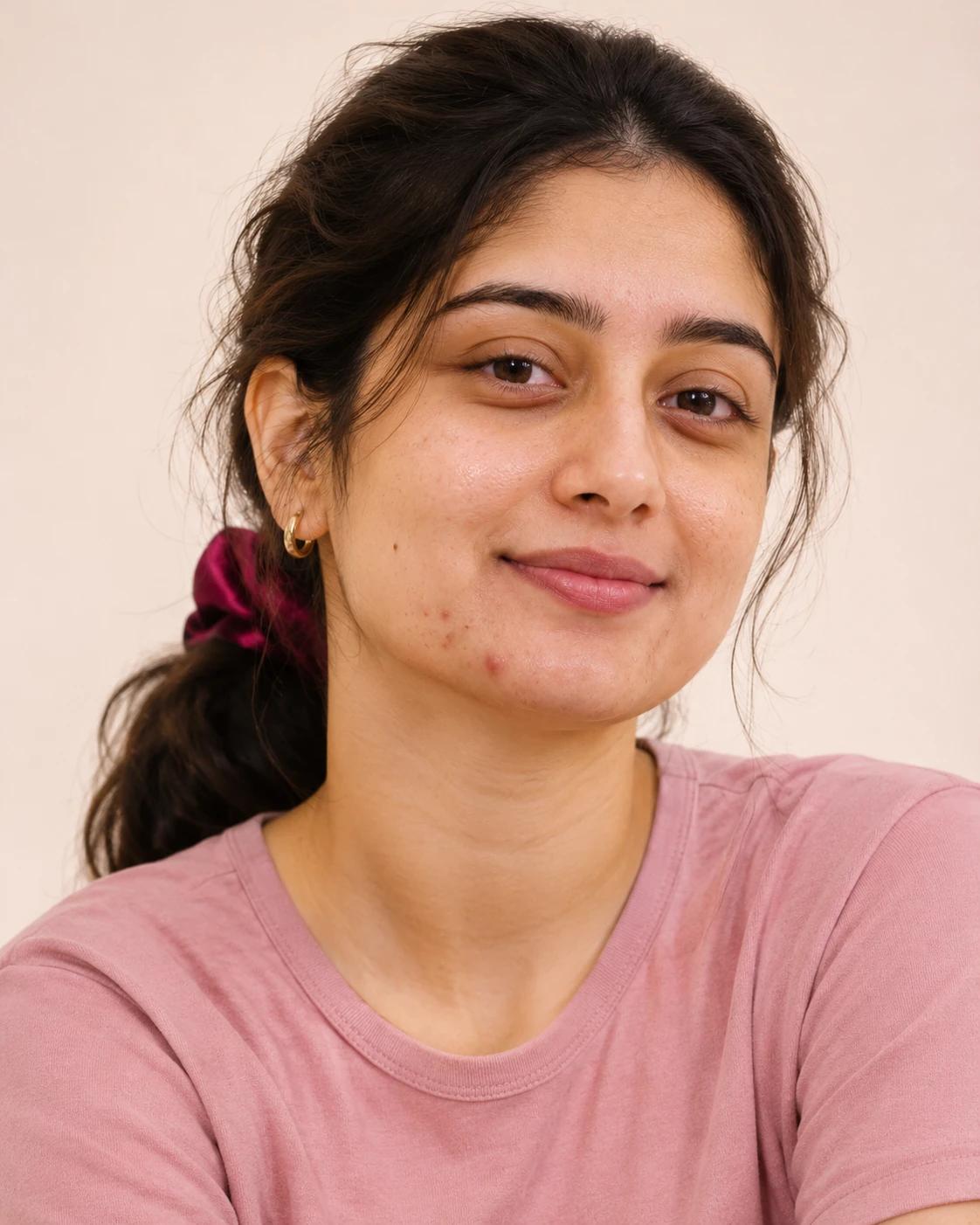
Some people scar more easily than others.
The doctor checks the scar type and depth in side light, separates scars from pigment marks, and confirms acne is under control before planning.
 Microneedling
 Microneedling with radiofrequency
 Chemical peels and other procedures
Number of sessions, intervals and suitability are decided by the doctor after assessment.
| Scar type | What it looks like | Options often discussed |
|---|---|---|
| Rolling | Soft, wave-like dips | Subcision, microneedling, MNRF |
| Boxcar | Round or oval dips with sharp edges | MNRF, peels, combined plans |
| Ice pick | Narrow, deep holes | Focused treatments such as TCA CROSS |
| Raised (hypertrophic or keloid) | Firm, raised scars | Steroid injections, silicone gel |
| Red or brown marks | Flat marks, not true scars | Sun protection, topical care, peels or laser toning |
For scars from injury, surgery or burns, see scar revision.
Most people need a series of 3 to 6 sessions, about 4 to 6 weeks apart. Improvement builds slowly, as new collagen forms over 3 to 6 months after each session. Combining methods often works better than one method alone.
Use sunscreen every day, avoid picking new spots, and keep active acne under control. Avoid retinoids and scrubs for a few days around each session unless told otherwise.
Improvement varies and some scars may reduce only partly. Procedures can cause temporary redness, swelling or pigment change, and a series of visits is usually needed.
Results differ from person to person and cannot be guaranteed.
See a doctor first if acne is still active, as scar procedures are usually planned after it is controlled.
No treatment can promise complete removal. The goal is a smoother look, and the doctor explains what is realistic for your type of scar.
Usually once acne is under control. The doctor decides after assessment.
Most procedures have a few days of redness. You will be told what to expect before you decide.
Yes. Settings and products are chosen carefully to lower the risk of darkening, and a test session may be done first.
Creams can fade red or brown marks, but they do not fill true dips in the skin. Those need procedures.
Some smoothing is often seen after 2 to 3 sessions. The full effect builds over several months.
A short educational video from the clinic's YouTube channel. It loads only when you press play.
Please do not share medical details in the booking form.
MBBS, MS (ENT), Fellowship in Rhinoplasty, Fellowship in Facial Aesthetic Surgery. Delhi Medical Council reg. no. 57646. Last reviewed November 2026.
This page is for general information and does not replace a consultation. Results vary between people.
Deep acne scars and holes on the cheeks can often be improved without surgery. Scar types, treatment options, sessions and realistic results explained.
Dark spots after pimples are not the same as pitted scars. Learn the difference between acne marks and acne scars and how each is treated.
How MNRF helps acne scars, enlarged pores and rough texture, who is suitable, sessions, results timeline, downtime and how to choose a doctor in West Delhi.
One consultation with me. I look, explain, and you decide in your own time.
We use a few cookies to understand how the site is used. Nothing starts until you choose. Read the privacy policy.