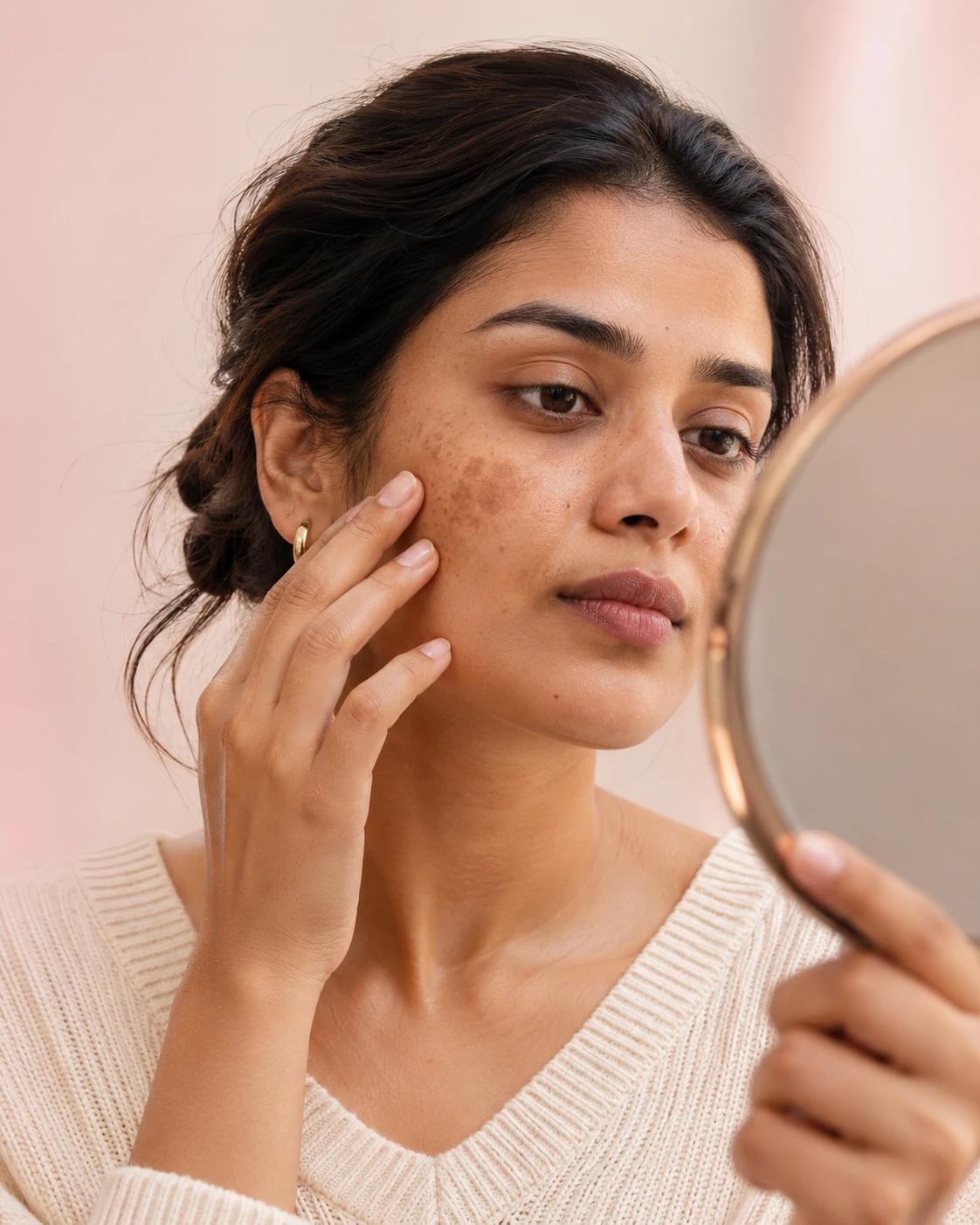
Oil and blocked pores.
Skin oil and dead cells collect in the pore opening.
Acne is a common skin condition, not a hygiene problem. Early, steady treatment can reduce the chance of marks and scars.
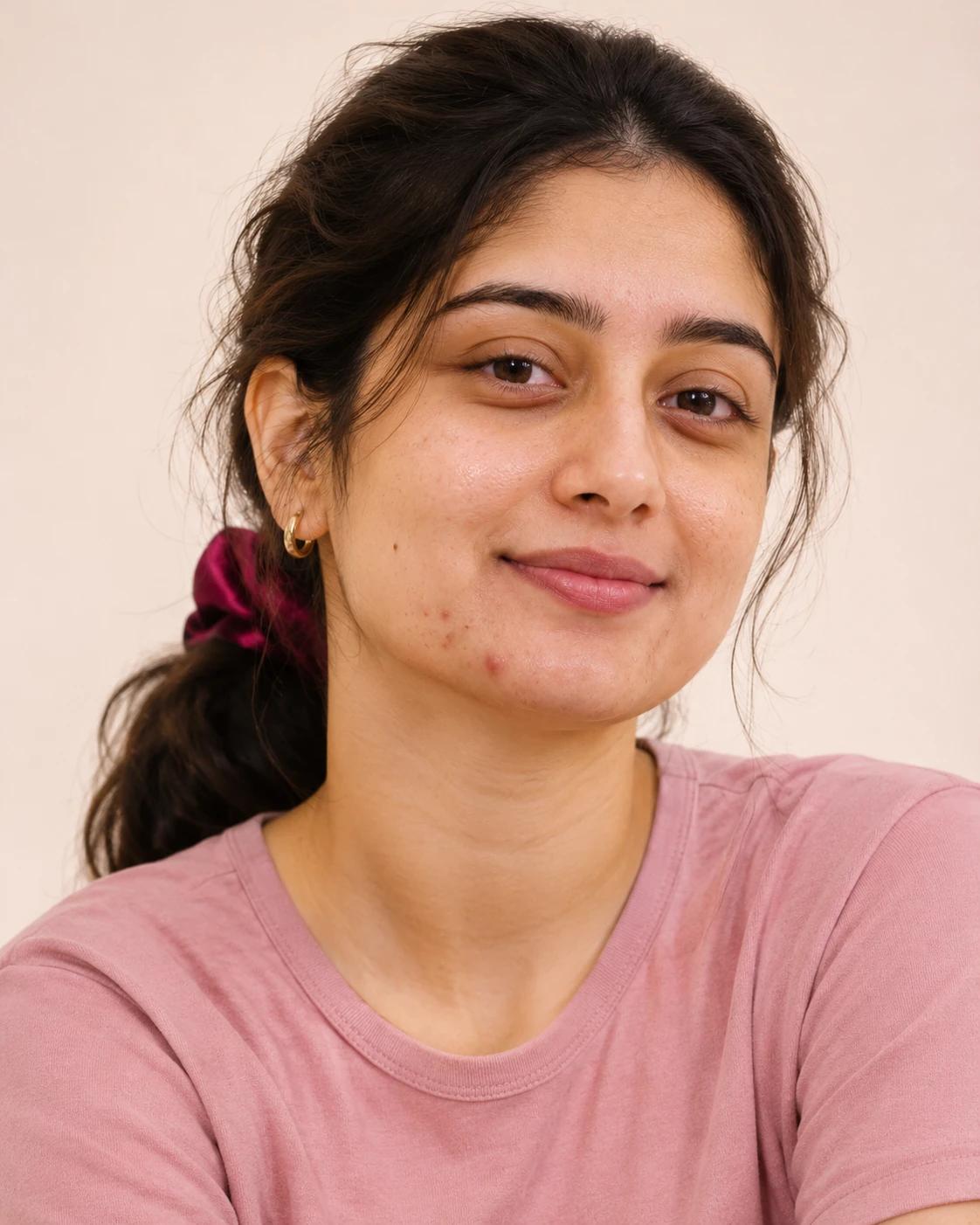
Illustrative model. Not a patient.
Acne forms when pores block and become inflamed. It can appear as blackheads, whiteheads, red bumps or deeper painful lumps, on the face, chest or back.
Skin oil and dead cells collect in the pore opening.

Changes around periods, stress and some conditions raise oil production.

Skin bacteria feed on trapped oil and trigger redness and swelling.

Heavy cosmetics, picking and some medicines can make acne worse.
The doctor grades the acne, checks for scarring or hormonal signs, and asks about past treatments, cycles and skin care. Some patients need blood tests or a referral.
 Topical and oral medicines
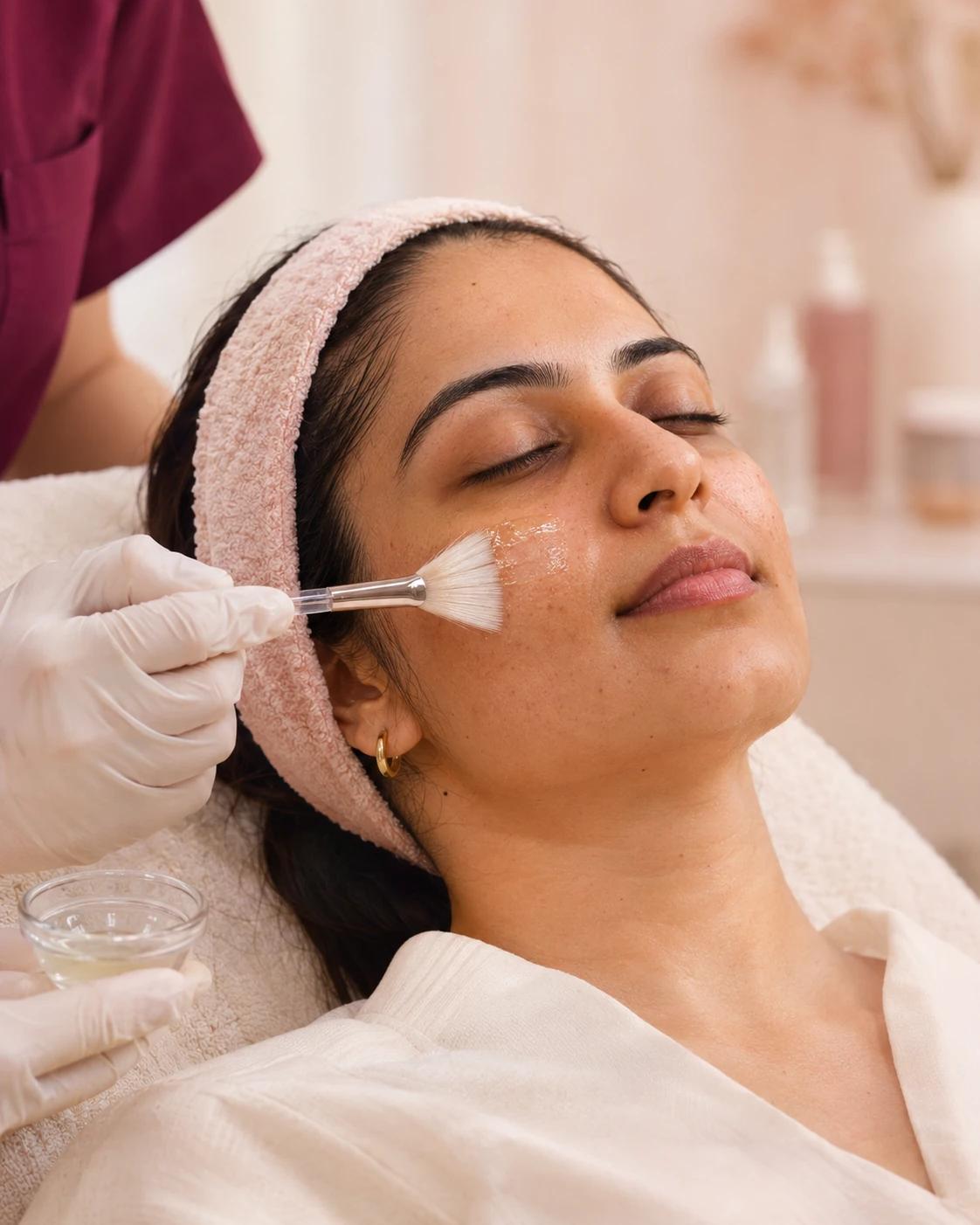 Chemical peels
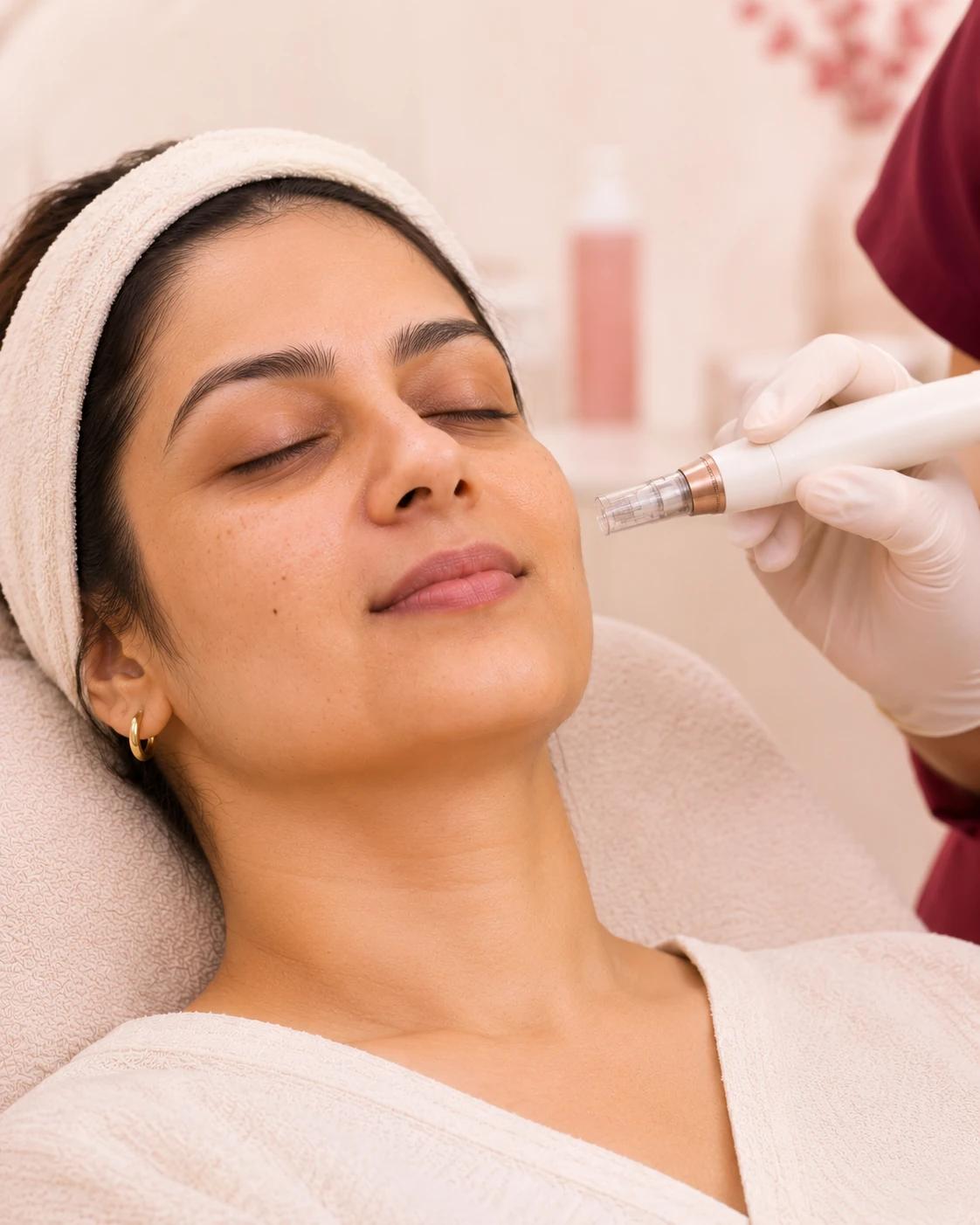 Procedures for active lesions
Number of sessions, intervals and suitability are decided by the doctor after assessment.
Mild acne means mainly blackheads and whiteheads. Moderate acne adds red bumps and pus spots. Severe acne includes deep, painful lumps (nodules or cysts) that are more likely to scar. The grade guides the choice of treatment.
Acne that starts or continues after 25, especially along the jawline and chin, may be linked to hormones. Irregular periods, extra facial hair or weight changes may point to conditions such as PCOS, which need medical review alongside skin treatment.
Medicines can cause dryness or other effects, and some are not suitable in pregnancy. The doctor explains these before you start.
Results differ from person to person and cannot be guaranteed.
See a doctor early if acne is painful, leaves marks, comes with irregular periods or hair growth, or has not improved with over the counter care.
Not always, but deeper or picked acne can. Treating it early lowers the risk.
Evidence is mixed and differs between people. The doctor can discuss patterns you have noticed.
Squeezing can push infection deeper and raise the chance of marks. Leave it to a clinician.
Most treatments take 6 to 12 weeks to show clear improvement. Stopping early is a common reason they seem to fail.
Some medicines are not safe in pregnancy. Tell the doctor if you are pregnant or planning to be.
Yes. Body acne is common and is treated in a similar way.
A short educational video from the clinic's YouTube channel. It loads only when you press play.
Please do not share medical details in the booking form.
MBBS, MS (ENT), Fellowship in Rhinoplasty, Fellowship in Facial Aesthetic Surgery. Delhi Medical Council reg. no. 57646. Last reviewed November 2026.
This page is for general information and does not replace a consultation. Results vary between people.
Is your teenage son or daughter's acne normal, or does it need a doctor? Signs to watch, what treatment involves, and how to help without blame.
Pimples returning even after creams? The common reasons acne keeps coming back, what hormones and habits do, and when to see a doctor in Janakpuri.
What causes acne, which habits can make it worse, and when to see a doctor.
One consultation with me. I look, explain, and you decide in your own time.
We use a few cookies to understand how the site is used. Nothing starts until you choose. Read the privacy policy.