

Sun and light.
Ultraviolet and visible light can switch pigment cells on and keep them active.
Dark patches on the face have more than one cause. A proper diagnosis comes before any treatment, because the wrong approach can darken pigment further.
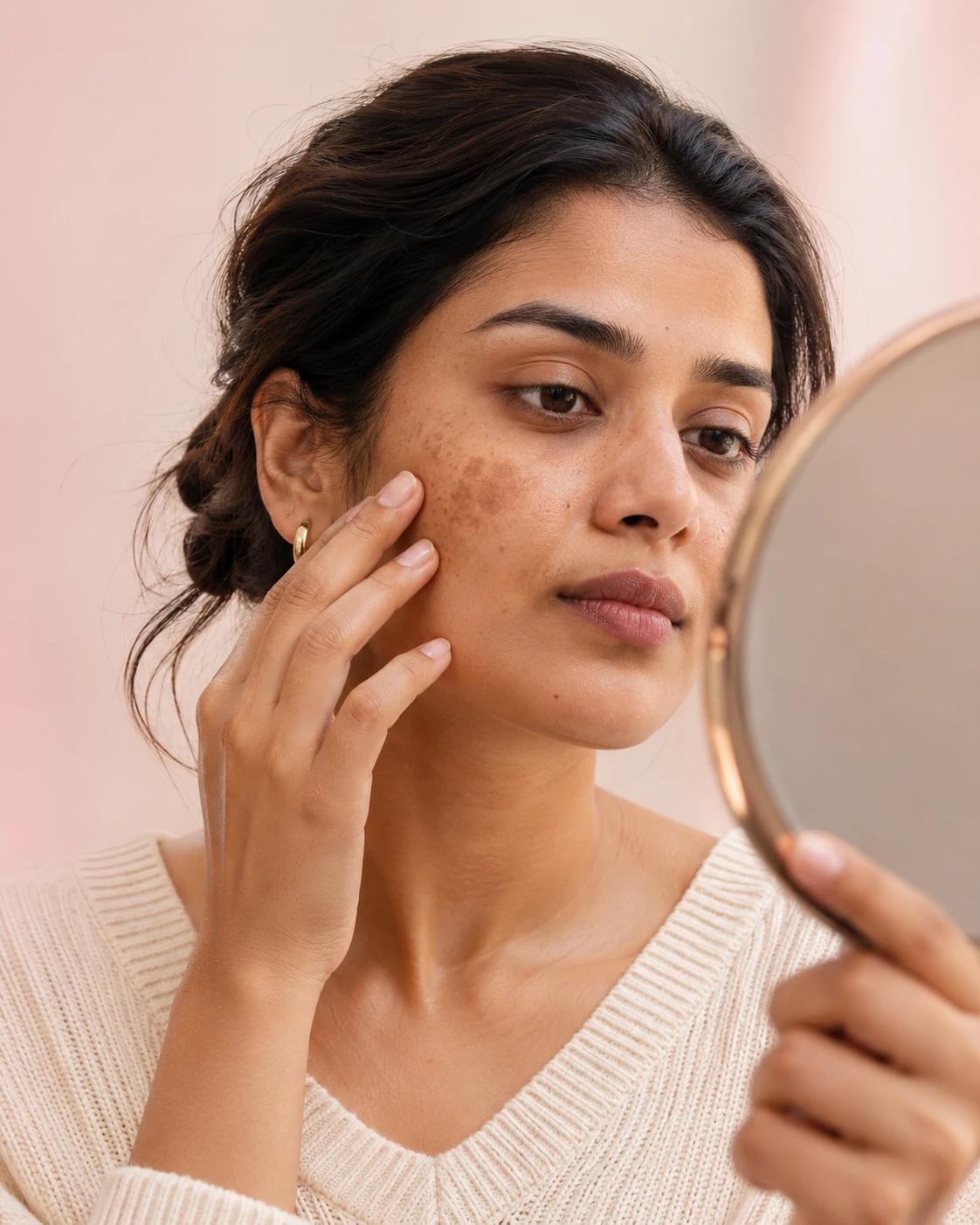
Illustrative model. Not a patient.
Pigmentation means areas of skin that look darker than the skin around them. Melasma is one common type, often seen on the cheeks, forehead and upper lip. Others include sun spots, marks left after acne or injury, and darkening from friction.
Ultraviolet and visible light can switch pigment cells on and keep them active.

Pregnancy, some contraceptives and thyroid changes are linked with melasma.

Acne, eczema or irritation can leave a darker mark as the skin heals.

Melasma often runs in families and is more common in skin types that tan easily.
The doctor looks at the skin in good light, asks about sun exposure, medicines, hormones and products you use, and may use a dermatoscope to see how deep the pigment sits. This decides which options are suitable.
 Sun protection and skin care plan
 Chemical peels
 Laser toning
Number of sessions, intervals and suitability are decided by the doctor after assessment.
| Type | Typical look | Main triggers |
|---|---|---|
| Melasma | Symmetrical brown patches on cheeks, forehead, upper lip | Sun, visible light, hormones |
| Sun spots | Small, flat brown spots on sun-exposed areas | Long-term sun |
| Marks after inflammation | Brown marks after acne, rash or injury | Skin inflammation |
| Freckles | Small spots that darken in summer | Genetics, sun |
| Dark, velvety skin at the neck or folds | Thickened dark skin | May signal insulin resistance; needs a medical check |
Melasma is a long-term condition. Treatment lightens it, but sun, heat, visible light and hormones can switch it on again. A maintenance plan with sunscreen and topical care keeps it under control.
Use SPF 30 or above with broad-spectrum protection. A tinted sunscreen containing iron oxides also blocks visible light, which matters for melasma. Reapply every 2 to 3 hours outdoors.
Pigmentation can return, especially with sun exposure and hormonal triggers. Some procedures can darken skin if used on the wrong type of pigment, which is why assessment comes first.
Results differ from person to person and cannot be guaranteed.
See a doctor soon if a dark patch is new, growing quickly, uneven in colour, raised, itchy or bleeding. These need a skin check, not a cosmetic treatment.
No. Tanning fades once sun exposure stops. Melasma often stays and can worsen with light and hormones, so it needs a plan from a doctor.
Sunscreen and gentle care help everyone. Stronger products can irritate skin, so ask the doctor before starting them.
It depends on the type and depth of pigment. The doctor explains the likely plan after assessment and reviews it as your skin responds.
Some types, such as sun spots, can clear well. Melasma is usually controlled rather than cured.
Only selected gentle lasers, in selected patients. Strong lasers can make melasma worse.
Some contain steroids or harmful ingredients. Use only creams prescribed for you.
A short educational video from the clinic's YouTube channel. It loads only when you press play.
Please do not share medical details in the booking form.
MBBS, MS (ENT), Fellowship in Rhinoplasty, Fellowship in Facial Aesthetic Surgery. Delhi Medical Council reg. no. 57646. Last reviewed November 2026.
This page is for general information and does not replace a consultation. Results vary between people.
Tried many creams for facial pigmentation with no result? Why it happens, the risk of steroid creams, and what a doctor checks before treatment.
Sunscreen, shade and habits that help protect skin and reduce pigmentation triggers.
Brown patches on both cheeks that won't fade are often melasma (jhaiyan). Causes, triggers, how it is diagnosed and treated, and why it can return.
One consultation with me. I look, explain, and you decide in your own time.
We use a few cookies to understand how the site is used. Nothing starts until you choose. Read the privacy policy.